Showing posts with label travel. Show all posts

Friday, October 8, 2010

Coptic Quarter, Alabaster Mosque and Khan el-Khalili.

It was 9 am and we were at our last day in Egypt. The forces were getting lesser and we set out to visit the Coptic quarter, the Jew, the Alabaster Mosque and finally the National Museum of Cairo.The output was a little late because one of the components of the group had been hard, "Pharaoh's revenge" the night before and was in poor condition. Nevertheless, we managed to leave for our first destination: the neighborhood Coptic Christians neighborhood and Egypt, where we visited one of their churches, within which Greek influence was not allowed access to our guide for being a Muslim .

After a short visit we went wandering through the narrow streets to a Jewish synagogue and later drive to the Alabaster Mosque, located on the hill north of Cairo, Saladin's Citadel, a fortress of the XII century, where you can see stunning views of the city. The entrance, although permitted to tourists of both sexes is made covering the feet with a hose and carrying little provocative clothing, being essential in the case of women, a scarf covering her head and shoulders. It is advisable to bring your own to avoid hitting you on your head a smelly rag.

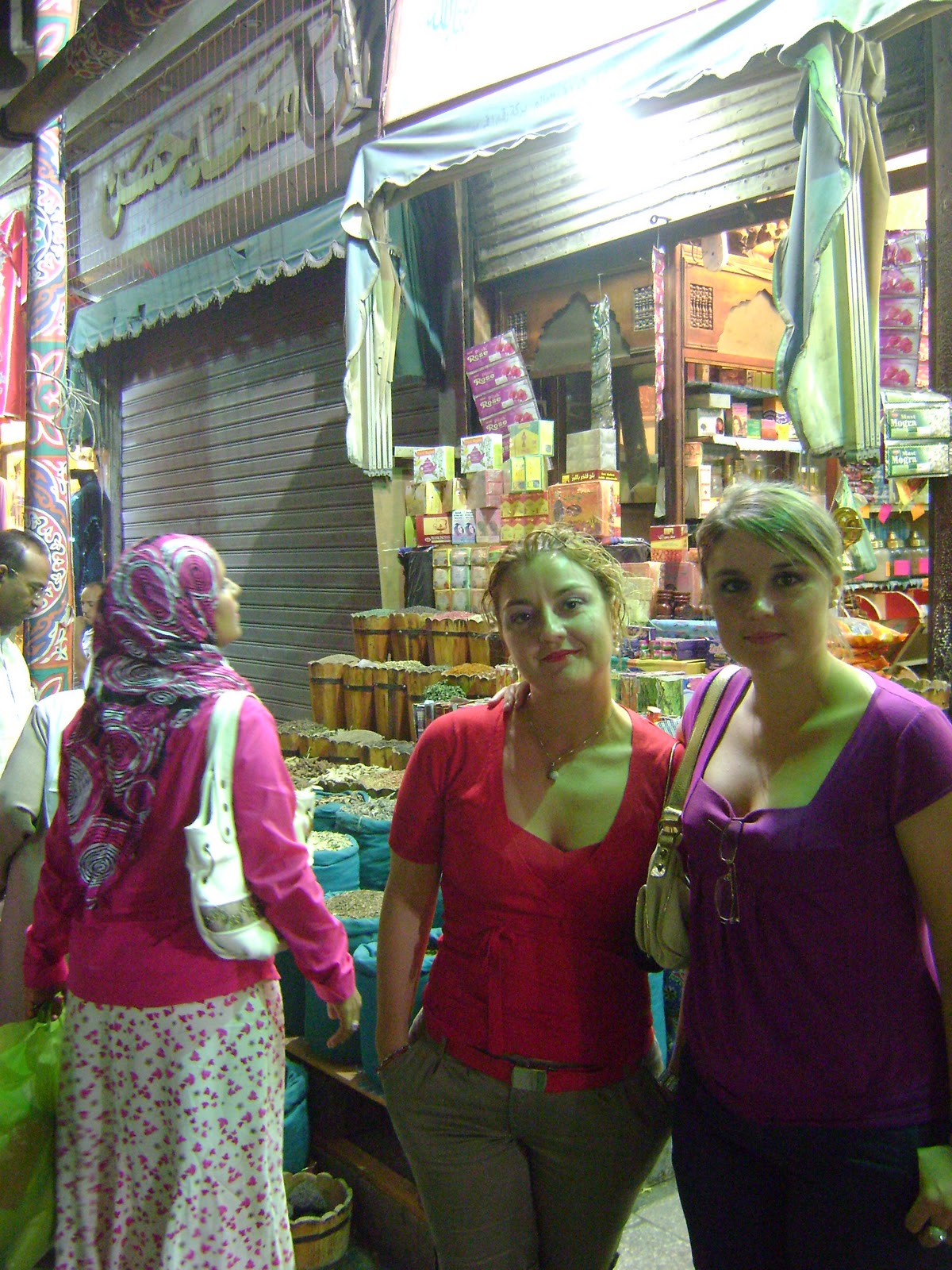
After the obligatory pictures left the mosque and drove to the old bazaar in the city, the bazaar of Khan el-Khalili, a bazaar with shops where you can find any memory of the country. Yes, be prepared to support the vendors continually harass you.After the shopping, of course included many of papyrus (the most typical of the country remember), lunch and continue the journey of visits, this time the Cairo Museum, one of the most famous in the world. The museum itself is striking by objects placed there, but no infrastructure (except in the halls of the mummies, which provided for a small additional fee you can see some of the most famous mummies of ancient Egypt) as they are all objects "lying" in any way, with entries made by hand on a piece of paper.

Back at the hotel, shower, dinner and a short walk on our own (after haggling with the driver) to the Khan el-Khalili bazaar, cafe Fishawy, or cafeteria of mirrors, one of the most interesting places to visit in this area of the city.


And so our last night in Egypt. The next day to the airport, 5 hours of flight and arrival to Barajas.
Thursday, September 23, 2010

Philae and travel to Cairo.

It was 9 am and we had finally rested a long night after the long day at Abu Simbel. Now, we had felucca ride and the visit to the Nubian Village.We started the tour, following negotiations with the manager of the ship to leave the room after the meal rather than before 12.Thus, the return could take a shower and change clothes because the heat was still unbearable even during this stage of the journey.


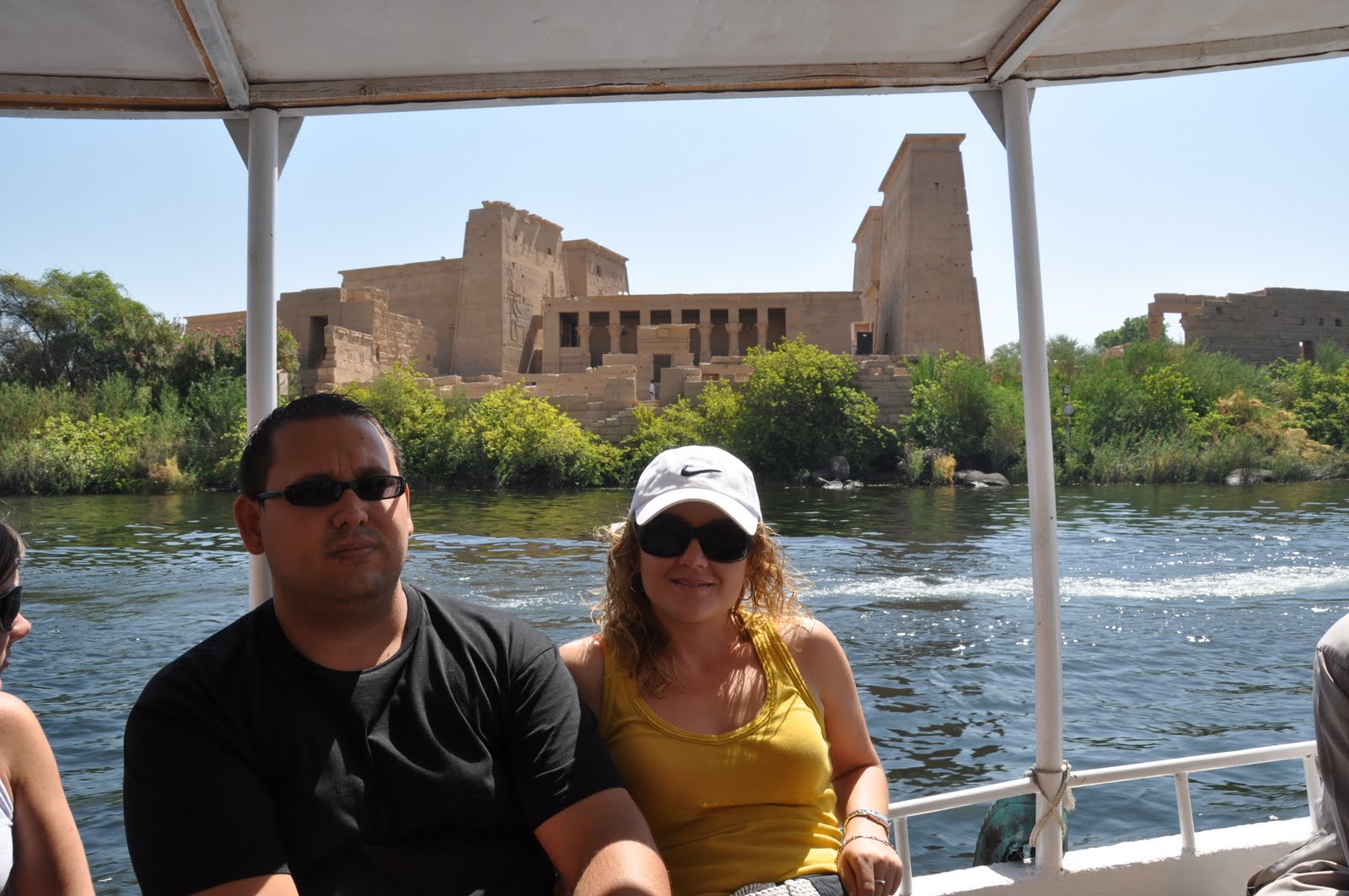
So we started to take a small boat that took us to the temple of Philae, a temple of Roman origin located on an island in the Nile. A lovely place with beautiful views.


Two other tours are available that morning, which made our Argentinean partners and they advised against us, the Aswan Dam and the Unfinished Obelisk.Subsequently, shower, meal and transfer to Aswan airport (after many requests for tips from the ship's departure to boarding the plane for anyone who could play sometime in your suitcase, look at her or take her away for you).After a short flight (about two hours) we landed at Cairo airport, a modern airport in a backward culture. Valgo the example of being in time of Ramadan every store where you could have bought snuff or alcohol were closed.


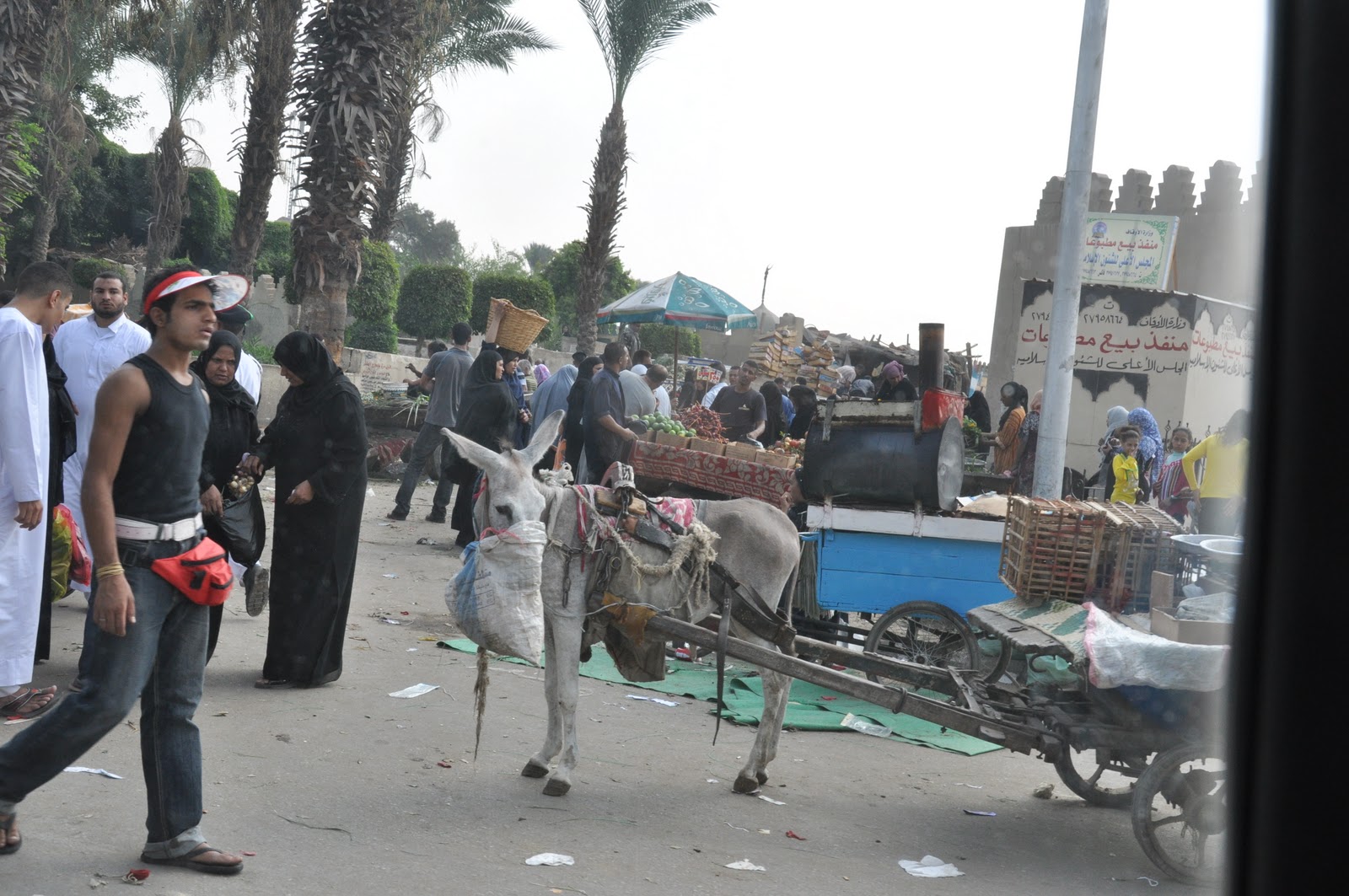
So, we took a small truck (at this stage of their journey we were only Cristina, Raquel, Jesus and me) that took us to our hotel, the luxurious Mena House Oberai, located at the very foot of the pyramids of Giza and rated 5 stars (from the top flight within five stars, because in Egypt this category is subdivided into many more). During the journey from the airport to the hotel we saw chaos in the way of driving in this country, can see from a child clinging to the exterior of a vehicle to change direction or reversing loop in the middle of the freeway.


After leaving luggage in the rooms, a beer in the garden of the hotel, dinner at a restaurant opposite the hotel (apparently one of the best of Cairo in Egypt although the restaurants outside the main hotels leave much to be desired). The dinner of fish and typical products Egyptians, with plenty of spice. As I said in the previous report from this time and we were not able to control the meals on the trip, because they were all in local restaurants where the quality with respect to the buffet of the cruise was abysmal. So, little by little all (some sooner than others) suffered "the vengeance of the pharaoh."


After dinner, accompanied by the guide (which like most of the guides in Egypt were arrogant and had a girlfriend out of the country, but when we began to investigate his history of international lover fell under its own weight) and after crossing a street (all an odyssey in this country for traffic chaos) helped by a villager with a later request for a tip, we went for a coffee (or whatever you want to call it) close to take some drinks and smoke a shisha.And so, back to the hotel to rest and prepare for the next day's excursion to the pyramids at Giza.


Ver Asuan. en un mapa más grande

Sunday, September 19, 2010

Felucca ride and visiting the Nubian Village.

It was 5 pm and after a short break after have visited the magnificent complex of Abu Simbel, we were prepared for excursions in the afternoon, the felucca ride and a visit to the Nubian Village.

We started on the east bank of the Nile by taking a felucca, the traditional sailing boat of the Nile, for a short cruise along the river in which you can see beautiful images and so-called "pirates of the Nile . This Egyptian children call you "raid" in small wooden or cardboard boats in search of alms by the singing of songs in many languages as passengers listen to the felucca.


After this tour we got to a beach on the west bank where you could if you wanted, take a dip in the Nile River.


A few minutes of rest, after being harassed on the beach by vendors of gifts (even you desert sand sold in small glass bottles) and we walked up to a herd of camels who were in charge of transporting tourists from the beach to the People Nubian payment by our guide (the tour was already included) and reach the posterior tip to the Nubian Village.


Thus, galloped along a small cliff where you feared for your safety even if you claimed that nobody had ever had any problems, we reached the Nubian Village, a small town in which you show the simple life of the habitants of that zone, a distinct race from the Egyptian and characterized by its extremely dark color. They show you their customs, their distinctive tattoos, their own language, distinct from the Egyptian and you can stroll from their homes, very picturesque.


Emerging from this group of houses, you expect all the local children waiting for your charity and how much you give them. In theory, as we had heard from the agency, they would be happy to take her pens, candy and this like, but in reality, they seemed real piranhas called everything you carried including underwear if you gave it.


After the visit, return to Aswan, last shopping in the souk in the city and last dinner on board and first fired (in this case of Juan, who had made the opposite journey, starting with the Cairo. Unwise if suffering from diarrhea, also called there "the revenge of the Pharaoh" and then the cruise will make you eternal. It is advisable to start with the cruise control as the meals you can do better than in restaurants you visit in the capital of Egypt.). And so, to rest for the next day with a visit to the temple of Philae and the trip to Cairo.


Ver Asuan. en un mapa más grande

Russia.

Saint Peters Burg.

Moscow.


Choose your PDF guide.

Wednesday, September 15, 2010

Abu Simbel.

It was three thirty in the morning and sounded the alarm. Began a new and difficult day of hiking in Egypt. The day before we arrived in Aswan and today we had an exciting day ahead. This morning we had to visit the majestic complex of Abu Simbel, formed by two rock-cut temples that had to be mobilized piece by piece from its original site to avoid being under the waters of Lake Nasser. For further information.


Thus began the journey of more than three hours by road (road in the middle of the desert) that obviously took the opportunity to sleep. You have two options to reach the plane, which increases the cost of your ticket price and you lose some time between walks through airports and choose another option that mostly everyone is on the road in the desert. A trip in the middle of nowhere, where you see only sand dunes and must be escorted by police to prevent attacks or suffer an accident and never find you. But basically it's worth the second option. In this journey we begin to discover the "wonderful" way of driving to which they are accustomed in this country, and we could see a two-lane highway as they were three vehicles in the same direction fully occupying the width of the road, making changessudden braking direction and put you the creeps.

Immediately upon arrival, breakfast picnic, visit the bathroom (as in the rest of the trip was important to know where he could be the closest) but this time we have not all been affected by the "evil of Pharaoh" leg stretch and preparations for the visit.


So we got to the entrance area of Abu Simbel and again, the experience of our guide allowed us to arrive before the rest of the visitors to take an excellent panoramic position from the monumental complex, since instead of the traditional route of access, took us around the monument for the left, travel a little longer but less traveled.The first image you have is spectacular, indescribable, despite having seen it countless times in photographs, television or any other means. Those two colossal temples you admire and marvel at just seeing his site further along the lake Nasser.Photos of rigor and visit inside where it is not permitted to take photographs but there is always a solution if you have a good zoom, and you can take them from the front door with the guard (yes, it's stupid but those are their rules).


After a rest and fluid supplies (this is the only place where they do not haggle over the price of drinks or other articles, as they are in the middle of the desert and you have no choice but to buy in their stores. It's funny.) , we took our way back to our ship for lunch and prepare for outings in the afternoon: the felucca ride and visiting the Nubian village.


Ver Asuan. en un mapa más grande

Sunday, September 12, 2010

Rural houses in Spain.

In the next guide you can find a complete list of rural houses in Spain. Rural houses in Spain.


Friday, September 10, 2010

Egypcian party.

It was 9 pm and we were prepared for our first holiday in Egypt.After a busy day visiting Edfu and Kom Ombo temples and street vendors stalls, we rested in the pool on our ship, the Isis Amarante, we had taken a small snack in the afternoon and had passed through the small but well equipped boat shop, where we could buy in euros (as in the rest of the country) about Arab-style costumes with accessories including to attend evening classes.


First we enjoyed a dinner full of typical Egyptian Obviously we did not dare to try all the delicacies, as one of the fundamental tips to survive in this country is to look very much the type of food you eat because otherwise is extremely common for tourists to end up suffering a severe traveler's diarrhea. And in our case, as you will see in future chapters, was no exception, with the greatest influence in some than in others, which at the beginning of the trip were very daring with the food issue and trying to finish the trip with food operating room sterility many would like it to himself.


And then, after dinner, we passed the function room to dance and enjoy the rest of the night with Arabic music but not for long, because we were up early the next day, it would be intense, with visits to Abu Simbel, The felucca ride and entrance to the Nubian village.

Monday, September 6, 2010

Tourism in Murcia.


The Murcia region is little known even within Spain, maybe that’s the reason why it continues to be relatively unspoilt compared to other more overcrowded areas of the Spanish Mediterranean coast. Nevertheless its more than 300 sunny days a year with an average temperature of 21 degrees, and the 250 km (156 miles) of beaches of the so-called Costa Cálida (Warm Coast) have attracted tourists for decades. Although little known, Murcia is being promoted as a cultural destination, in which are included several tourist dynamic projects.[citation needed] Murcia is one of the Spanish autonomous communities that has grown the most in the last years, and it has conferred it the character of an ideal destination of services, shopping and for the organization of cultural events and conventions.

[edit]Cultural Tourism

[edit]Major tourist destinations


Murcia Cathedral.
  • Murcia, the capital city offers the facilities, equipment and services of a large city. It is the seventh largest Spanish city by population with approximately 439,000 inhabitants in 2009. Murcia's sights include a very tall belfry and its famous Cathedral. Murcia is also a large University town with more than 30,000 students per year. It has more than 2 million km2 of parks and gardens. Murcia has a rich history tied to the Jewish community.
  • Cartagena, is the region's second largest city and one of the main Spanish naval bases. Sights include its recently restored Roman Theatre (among its numerous other Roman remains), a number of modernist buildings made or its military fortifications
  • Lorca is a large medieval town at the foothills of where its famous castle stands. It is the second largest municipality of Spain by area.
  • Caravaca de la Cruz, or simply Caravaca, is one of the five official Holy cities for Catholicism since it is claimed to house of part of the Lignum Crucis, the Holy Cross.

[edit]The castles itinerary


Castle of Lorca
the interior of the region of Murcia has plenty of castles and fortifications showing the importance of these frontier lands between the Christian Castile and the Muslim Andalusia. They include:
  • Castle of Jumilla, a former Roman fortification turned by the Moors into an Alcazaba. The Castilian Kings and the marquis of Villena gave it its appearance of Gothic royal residence.
  • Castle of Moratalla, one of the largest castles of the province, built to defend the town of Moratalla from the invaders from the nearby Muslim Kingdom of Granada.
  • Castle of Mula, of Muslim origin, but as many castles, eventually restored and renovated.
  • Real Alcázar of Caravaca de la Cruz, where the Holy sanctuary was built, also of Moorish origin, conquered by the Christians and finally home of several noble families.
  • Concepción Castle, in Cartagena, built on one of the five hills of the old Carthagena, following the Roman taste. Now is home of the Centre for the Interpretation of Cartagena's History.
  • The Castle of Lorca, also known as the Fortress of the Sun.